EN ISO 11612
Protective Clothing Against Heat and Flame
This standard specifies requirements for protective garments used in environments where there is a risk of exposure to heat or flames. It forms the baseline protection for all flame-resistant workwear.
For full-body protection, the clothing must cover the neck, torso, arms, and legs—either as a coverall or as a jacket and trouser combination, both with the same level of protection.
EN ISO 11612 is divided into several performance categories. The letter codes indicate which types of heat and flame hazards the garment has been tested against.
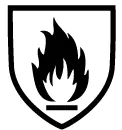
To qualify for CE marking, the garment must be tested in at least two categories, and A1 and/or A2 (limited flame spread) are mandatory. These results appear on the CE label together with the heat & flame symbol.
Each code has levels, where the highest number represents the highest performance. Garment design also affects CE classification for flame- and heat-protective clothing. Garments certified to B3, C2–C4, D2–D3, E2–E3, and F3 are always Category III PPE under the PPE Regulation.
Understanding the Performance Codes
Convective and Radiant Heat (B and C Codes)
- B – Convective heat / open flame
- C – Radiant heat
When testing for B (open flame) and C (radiant heat), two times are measured:
- Time until skin temperature rises by 12°C
– This is when the wearer first feels the heat (approx. 47–49°C skin temperature). - Time until skin temperature rises by 24°C
– This is when there is a risk of second-degree burns (approx. 59–61°C).
The difference between these two values represents the reaction time the wearer has to move away from the heat source. In the general industry, B1 is considered sufficient to allow the user time to react. In metallurgy, radiant heat protection is critical to avoid heat stress.
- C1 gives approximately 7–20 seconds of reaction time.
- C2 usually requires 2–3 garment layers and increases protection to 20–50 seconds.
Molten Metal Protection (D and E Codes)
- D – Molten aluminium (1–3)
- E – Molten iron (1–3)
If a textile withstands molten aluminium, it usually also protects against aluminium bronze and mineral melts.
If it withstands molten iron, it typically also protects against molten copper, phosphor bronze, and brass.
For other specific metals or alloys, specialist testing may be needed. Many modern textile systems such as Magma, Cantex, and Apex have been developed based on extensive molten-metal testing.
Full Code Overview
| Code | Description |
|---|---|
| A1, A2 | Limited flame spread (A1: surface ignition, A2: edge ignition) |
| B (1–3) | Protection against convective heat and open flame |
| C (1–4) | Protection against radiant heat |
| D (1–3) | Protection against molten aluminium |
| E (1–3) | Protection against molten iron |
| F (1–3) | Protection against contact heat |
Difference Between EN ISO 11612 and NFPA 2112
The American standard NFPA 2112 focuses more on flash fire hazards—common in the oil & gas industry—while EN ISO 11612 also includes molten metal tests, making it more suitable for heavy industrial environments.
Key differences:
- NFPA 2112 includes a 100-wash requirement before measuring char length (ASTM D6413).
- NFPA 2112 requires a mandatory manikin test (ASTM F1930) for flash fire.
- EN ISO 11612 includes an optional manikin test (ISO 13506).
- EN ISO 11612 tests are typically carried out after 5 wash cycles, unless otherwise specified.
EN ISO 11612 is recognized internationally and also accepted in the United States.