EN 61482-2
Protective Clothing Against Thermal Hazards of Electric Arc
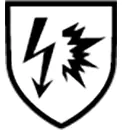
This standard specifies protective clothing for work involving high voltage on exposed electrical equipment or when a system must be opened and there is a risk of an electric arc. Garments approved for arc protection are classified as Category III PPE under the PPE Regulation. Both the fabric properties and garment design are critical parameters for CE marking of arc-protective clothing.
Working with electricity carries the risk of injuries caused by an electric arc. One of the risks of an electric arc is that it can develop a very strong radiant heat. By using garments tested and certified to withstand the energy levels of a potential arc, you protect yourself against this hazard. It is essential to wear protective clothing that covers the entire body to achieve complete protection.
To certify arc-protective garments according to EN 61482-2, the clothing must undergo at least one of the following test methods:
- Open Arc Test (EN IEC 61482-1-1)
- Box Test (EN 61482-1-2)
Both tests evaluate the ability of materials and garments to resist heat, flame, and melting from an electric ARC incident, but each test looks at ARC flash protection from a different perspective and provides complementary information.
Correct use and maintenance of EN 61482-2 clothing
- Clothing must fully cover the body and be properly fastened.
- It should always be worn with other PPE for complete protection.
- Garments such as T-shirts, underwear, etc. made of melting fibres (e.g. polyamide, polyester, etc.) must not be used.
- If contaminated with grease, oil or flammable materials, the protection level is compromised and the garment should not be used.
- Clothing that is torn, has holes, or damaged closures must be replaced. Repairs are only allowed if carried out in line with the manufacturer’s instructions.
Open Arc test (IEC 61482-1-1)
This test measures how much incident energy a fabric or garment can withstand before it would likely cause a second-degree skin burn.
ARC ratings are attributed to a product, describing its protective performance when exposed to an electric ARC. The ARC ratings ELIM, ATPV or EBT are numerical values that provide a quantitative rating, helping to match protective clothing with the potential energy level of a known ARC hazard. The higher the value, the better the protection.
- ATPV (Arc Thermal Performance Value):
The energy level (in cal/cm²) at which there is a 50% chance of a second-degree burn. - EBT50 (Energy Breakopen Threshold):
The energy level (in cal/cm²) at which there is a 50% chance of fabric break-open, meaning the fabric will tear or develop a hole. - ELIM (Incident Energy Limit):
A more conservative value, indicating the maximum energy exposure (in cal/cm²) where there is no risk of a second-degree burn. It represents the average of the 3 highest incident energy values without reaching second-degree burns.
Arc in a box test (IEC 61482-1-2)
This test simulates a short-circuit ARC that is constrained and directed toward the fabric or garment, representing real-world arc scenarios in enclosed spaces.
Two classes of protection can be identified: APC 1 and APC 2, depending on the level of ARC current they can withstand, expressed in kA. The higher the class, the better the protection.
Arc protection class ability to withstand exposure to ARC:
- ARC Protection Class 1 (APC1): 4kA
- ARC Protection Class 2 (APC2): 7kA